How to Find a House for Rent in Kenya in 2026: A Safer, Smarter Guide
Finding a house for rent in Kenya should not mean spending entire weekends walking from estate to estate, calling numbers painted on walls or paying someone simply to point at a gate....

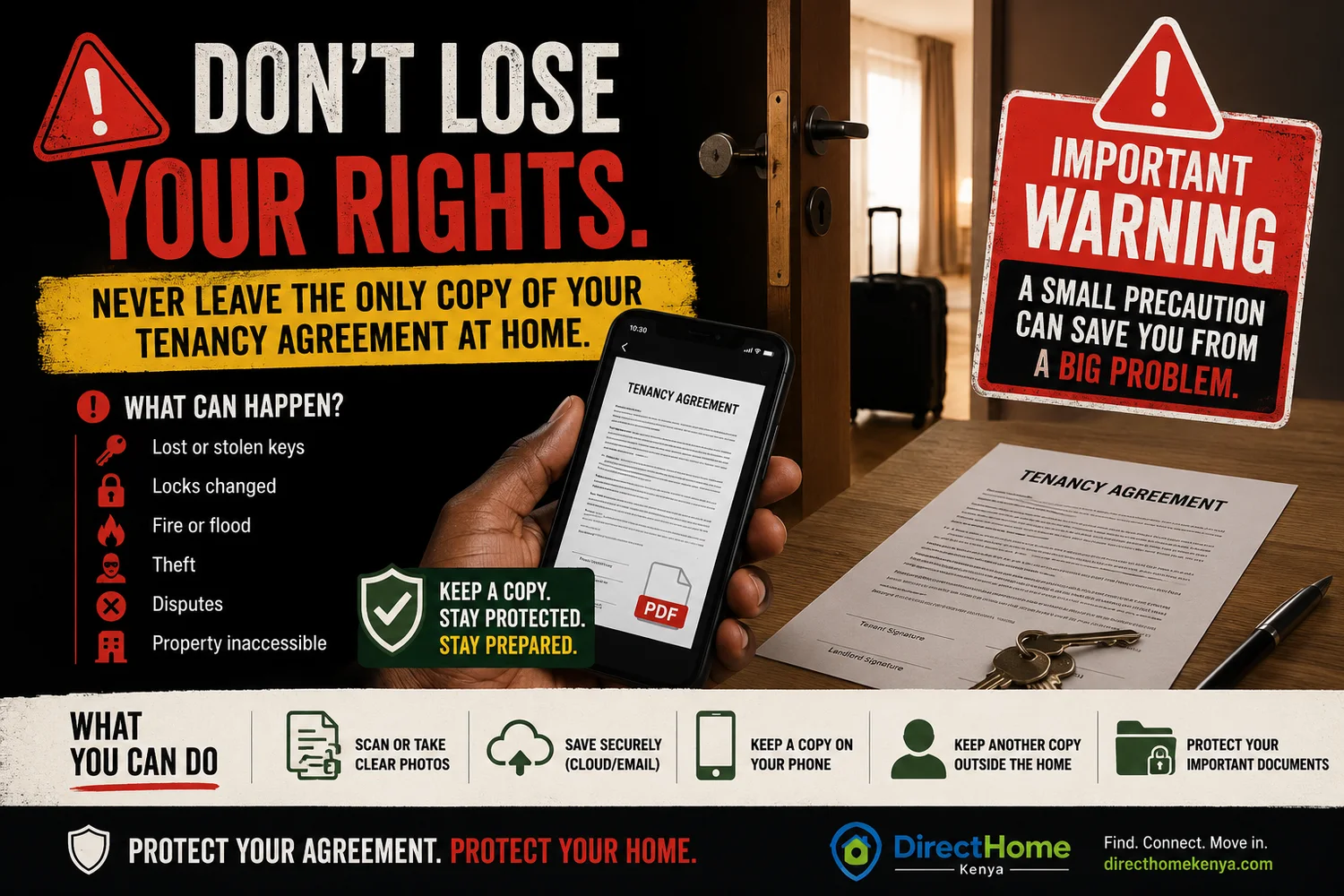
Finding a house for rent in Kenya should not mean spending entire weekends walking from estate to estate, calling numbers painted on walls or paying someone simply to point at a gate. House hunting will always require some effort. You are choosing where you may sleep, work, raise a family or spend a large part of your income. However, the process can be much easier when you know where to search, what to check and when to walk away. Whether you are looking for an apartment in Nairobi, a family home in Nakuru, a bedsitter in Eldoret, a coastal rental in Mombasa or a house in Kisumu, Ruiru, Thika, Kitengela or another part of Kenya, the same basic rules apply. The Safest Way to Find a House for Rent in Kenya A safer property search usually follows these steps: Set a realistic monthly budget. Choose an area that fits your daily routine. Compare several current property listings. Confirm who is advertising the property. View the home before making any payment. Check the condition of the property carefully. Read the tenancy agreement. Verify the payment recipient and keep a record of every payment. A beautiful photograph can help you discover a home. It should never be the only reason you trust one. Set Your Real Rental Budget One of the most common mistakes tenants make is searching only by monthly rent. A house advertised at KES 25,000 per month may cost considerably more once you include the security deposit, service charge, electricity, water, internet, parking, transport and moving expenses. Before starting your search, decide what you can comfortably afford each month without turning every rent date into a small financial emergency. Your total housing budget may include: Monthly rent Security deposit Service or maintenance charges Water and electricity Internet Parking Transport to work or school Moving expenses Any clearly disclosed agent or viewing fees Ask about these costs before arranging a viewing. A serious landlord or professional agent should be able to explain what is included in the rent and what must be paid separately. Do not assume that every property requires the same deposit or payment structure. Terms can vary, so confirm everything in writing before committing. Choose a Location That Fits Your Real Life A good home in the wrong location can quickly become a bad decision. Do not choose a neighbourhood only because it looks attractive in photographs. Think about what living there would mean from Monday morning to Sunday evening. Consider: Distance to work, school or university Public transport and road access Traffic during the hours you normally travel Water and electricity reliability Mobile network and internet availability Nearby shops, markets and medical facilities Security around the property Noise during the day and at night Flooding or poor road access during heavy rain Parking and access for visitors Search the surrounding area on a map before travelling. Look for major roads, landmarks, schools, hospitals, shopping centres and transport connections. A neighbourhood name may cover a very large area. A property described as being “near” a shopping centre could be five minutes away—or “near” in the highly creative language sometimes used in property advertising. This is why map-based property discovery is valuable. It gives you a clearer idea of the approximate area before you spend time and money travelling to a viewing. Compare Several Property Listings Do not fall in love with the first listing you see. Compare similar houses in the same area. Look at the rent, number of bedrooms, condition, size, included services and distance from important locations. This will help you understand whether the asking price is reasonable. A lower price does not automatically mean that a listing is fake. Sometimes a landlord wants to fill a property quickly. The building may also be older, further from the main road or missing certain amenities. However, a dramatically low price combined with pressure to pay immediately should make you cautious. A useful rental listing should clearly show: The monthly rent in Kenyan shillings The property type The number of bedrooms and bathrooms The general location Recent photographs Available amenities Deposit requirements Service charges Whether the listing is from an owner or an agent The date the property became available A good property listing should answer basic questions before you need to send a message. Read the Full Property Description Photographs naturally receive most of the attention, but the description often reveals whether the property is genuinely suitable. Look beyond words such as “modern”, “executive”, “spacious” and “luxurious”. These terms are subjective. One person’s spacious bedroom may be another person’s ambitious storage cupboard. Look for specific information. Does the listing explain the water supply? Is parking available? Is the property furnished or unfurnished? Are pets permitted? Is there a service charge? Are any facilities shared? Compare the description with the photographs. If the listing advertises three bedrooms but shows only one room, ask why. If the photographs appear to come from different properties, request clarification. You can also ask for a recent photograph or short video showing a particular part of the home, such as the kitchen, bathroom, building entrance or view from the balcony. This does not replace an in-person viewing, but it can help you eliminate unsuitable properties earlier. Confirm Who Is Offering the Property Before arranging a payment, establish whether you are dealing with: The property owner An authorised family member or representative An independent property agent A real estate agency A property manager Agents and agencies can play a valuable role, especially when they understand the local market and represent the property transparently. The important question is not simply whether an agent is involved. The real question is whether their identity, authority, fees and responsibilities are clear. Ask for the person’s full name and relationship to the property. Where appropriate, ask for evidence that they have permission to advertise and rent the home. An agent should be able to explain who they represent, what services they provide and whether any fees are payable. For purchases, long leases, unusual agreements or high-value transactions, stronger legal checks may be necessary. Consider speaking with a qualified Kenyan advocate or another appropriately regulated professional before committing. An online property listing is a starting point. It is not a replacement for proper verification. View the Property Before Paying A request to send money before you are allowed to view the property is one of the clearest reasons to slow down. Scammers often create urgency: “Many people are interested.” “Send the deposit now and I will reserve it.” “I am outside the country, but the caretaker will give you the key after payment.” Some genuine properties receive a lot of interest. However, urgency does not remove the need for verification. Before paying a deposit or rent, visit the property and confirm that it exists, matches the listing and is being offered by someone with the authority to do so. When possible, arrange the viewing during daylight. Tell someone where you are going, especially when meeting a person for the first time. You may also attend with a friend or family member. During the viewing, check: Doors, locks and windows Water pressure Taps, sinks and toilets Electricity and visible sockets Signs of damp, leaks or mould Kitchen storage and working surfaces Natural light and ventilation Mobile network reception Noise from roads, businesses or neighbours The condition of shared spaces Waste collection arrangements Parking and property access Security lighting, gates and guards where applicable Do not allow a polished living room to distract you from a leaking bathroom. Ask Direct Questions A property viewing is not only an opportunity to inspect the building. It is also your chance to understand the rental arrangement. Ask questions such as: Why is the previous tenant leaving? How long has the property been available? Who handles repairs? How is water charged? Is electricity prepaid or billed separately? Are there planned rent increases? What notice is required before leaving? Are there rules for visitors, pets or home businesses? Is there an inventory for furnished properties? Under what conditions is the deposit refunded? Are there any additional fees not shown in the listing? Pay attention to whether the answers are clear and consistent. A landlord or agent may need time to confirm a detail. That is normal. Avoiding reasonable questions, changing the story or applying unexplained pressure is different. Read the Tenancy Agreement Carefully Do not treat the tenancy agreement as a formality standing between you and the keys. Read it before signing or paying the full amount. Make sure you understand every financial obligation and important condition. The agreement should clearly identify: The tenant The landlord or authorised representative The property being rented The monthly rent The payment date and method The security deposit Service charges Utility responsibilities Repair and maintenance responsibilities The start and duration of the tenancy Notice requirements Rules for ending the tenancy Deposit return conditions Any inventory included with the property Ask for clarification when something is unclear. Do not rely only on verbal promises that contradict the written agreement. Keep a copy of the signed agreement, payment records, receipts, messages and any inventory or inspection photographs. For a dispute, long lease or high-value arrangement, seek advice from a qualified Kenyan legal professional. Verify Every Payment M-PESA and digital banking have made payments fast and convenient, but speed should not replace attention. Before confirming a transfer, check the recipient’s displayed name and compare it with the person or organisation you have already verified. Never share your M-PESA PIN, one-time password, banking password or account login with a landlord, agent or property platform. After paying: Keep the confirmation message. Request a receipt. Confirm what the payment covers. Make sure the amount matches the written agreement. Avoid paying unrelated third parties without a clear explanation. The fact that someone requests payment through M-PESA does not prove that the property or recipient is genuine. Protect Your Personal Information Property seekers may be asked for identification, employment details or other personal information. Some information may be required later in the tenancy process, but you should not send sensitive documents to every stranger who advertises a property online. Share only the information genuinely needed for the stage you have reached. During your initial search: Use the platform’s messaging system where available. Avoid posting identity documents in public groups. Never send passwords, PINs or verification codes. Ask why a document is required. Confirm who will receive and store it. Add a watermark to document copies where appropriate. Stop communicating when requests become excessive or unrelated. Searching for a home should not require you to publish your private life to the entire internet. Common Warning Signs of a Suspicious Rental Listing Be careful when several of these warning signs appear together: The rent is far below similar properties in the area. The advertiser refuses to arrange a viewing. You are pressured to pay immediately. The photographs do not match the description. The advertiser gives different names during the conversation. Payment is requested through an unrelated third party. The advertiser refuses to provide a receipt. You are asked for your PIN, password or verification code. The property location changes during the conversation. The person becomes aggressive when you ask reasonable questions. You are told that basic verification is unnecessary. The entire deal depends on trust but provides no documents or records. One unusual detail does not always prove fraud. Several unexplained inconsistencies are a good reason to leave. There will always be another house. Recovering lost money is much harder. A Better Way to Search for Rental Homes in Kenya DirectHome Kenya is built around a simple idea: property seekers should be able to discover homes more easily, communicate more directly and understand who they are dealing with. The platform supports property owners, professional agents and real estate agencies, while encouraging clear listings and transparent communication. The aim is not to remove every agent from the property market. Professional agents can provide real value. The goal is to reduce unnecessary barriers, hidden costs and situations where people are charged simply for access to basic property information. DirectHome Kenya uses map-based property discovery because a location should mean more than a neighbourhood name typed into a description. For privacy and security, the exact property location is not made public by default. A listing can first show the approximate area. An interested registered user can then request access to the exact location, and the property owner or agent can approve or decline the request. Initial communication can also take place through the platform instead of immediately exposing private phone numbers and WhatsApp details to everyone online. These tools can make property searching more organised and transparent. However, no platform can replace personal judgement, document checks, physical viewings or professional legal advice when it is needed. Rental Property Checklist Before agreeing to rent a property in Kenya, confirm that: The monthly rent and all additional costs are clear. You have viewed the property. The property matches the advertisement. You know whether you are dealing with an owner or agent. Any agent fees have been disclosed. The payment recipient has been verified. You have read the tenancy agreement. Repair responsibilities are explained. Deposit conditions are recorded. You will receive a receipt or payment record. You have kept copies of important messages and documents. You are satisfied with the location, access and surrounding area. Do not sign because you feel embarrassed about asking questions. A responsible landlord or professional agent should expect a serious tenant to check important details. Frequently Asked Questions What is the best way to find a house for rent in Kenya? Start with a property platform that provides clear prices, photographs, location information and direct messaging. Compare several listings, verify who is advertising the property and arrange an in-person viewing before making a payment. How can I avoid rental scams in Kenya? Do not pay simply because someone claims the property has many interested tenants. View the property, verify the landlord or agent, check the payment recipient, read the agreement and keep receipts and written records. Should I pay before viewing a rental property? You should be extremely cautious about paying a deposit or reservation fee before viewing and verifying the property. Pressure to pay before a viewing is a common warning sign. How much deposit is required when renting a house in Kenya? There is no single deposit amount that applies to every rental arrangement. The amount depends on the landlord, property and agreement. Confirm the deposit, its purpose and the refund conditions in writing before paying. How do I verify a landlord or property agent? Ask for their full identity, contact information and relationship to the property. An agent should be able to explain who they represent and what fees they charge. Stronger legal and ownership checks may be appropriate for long leases, purchases or high-value transactions. Is it safe to pay rent or a deposit through M-PESA? M-PESA is a payment method, not proof that a transaction is genuine. Confirm the recipient’s displayed name, verify the person or business independently and never share your PIN or verification codes. Can property agents list homes on DirectHome Kenya? Yes. DirectHome Kenya welcomes property owners, agents and real estate agencies, provided their roles, property listings and fees are presented transparently. Why does DirectHome Kenya show an approximate location first? Showing the approximate area helps property seekers evaluate the neighbourhood while protecting the exact location of the property. Exact access can then be shared through a controlled request approved by the property owner or agent. Find Your Next Home With More Confidence Your next rental home may already be waiting for you. The goal is not simply to find it quickly. It is to understand the property, the location, the costs and the person offering it before you commit. Search smarter. Ask questions. Verify before paying. Explore houses and apartments across Kenya on DirectHome Kenya, compare available properties and connect with property owners and professional agents through the platform.